
Most people think weight loss is about what you eat. They obsess over calories, carbs, and the latest superfood trends. But here’s something they miss completely. The speed at which you eat might matter more than the food itself. Your fork could be sabotaging your efforts without you realizing it. Fast eating triggers a cascade of hormonal responses that work against weight loss. This isn’t just theory anymore.
The research is overwhelming on this topic. Studies show slow eaters consume significantly fewer calories per meal. They feel more satisfied with less food. Their bodies process hunger signals more effectively. Yet most diet advice ignores eating speed entirely. This fundamental oversight explains why so many weight loss attempts fail. The solution isn’t another restrictive diet. It’s simply learning to eat like your grandmother did before fast food existed.
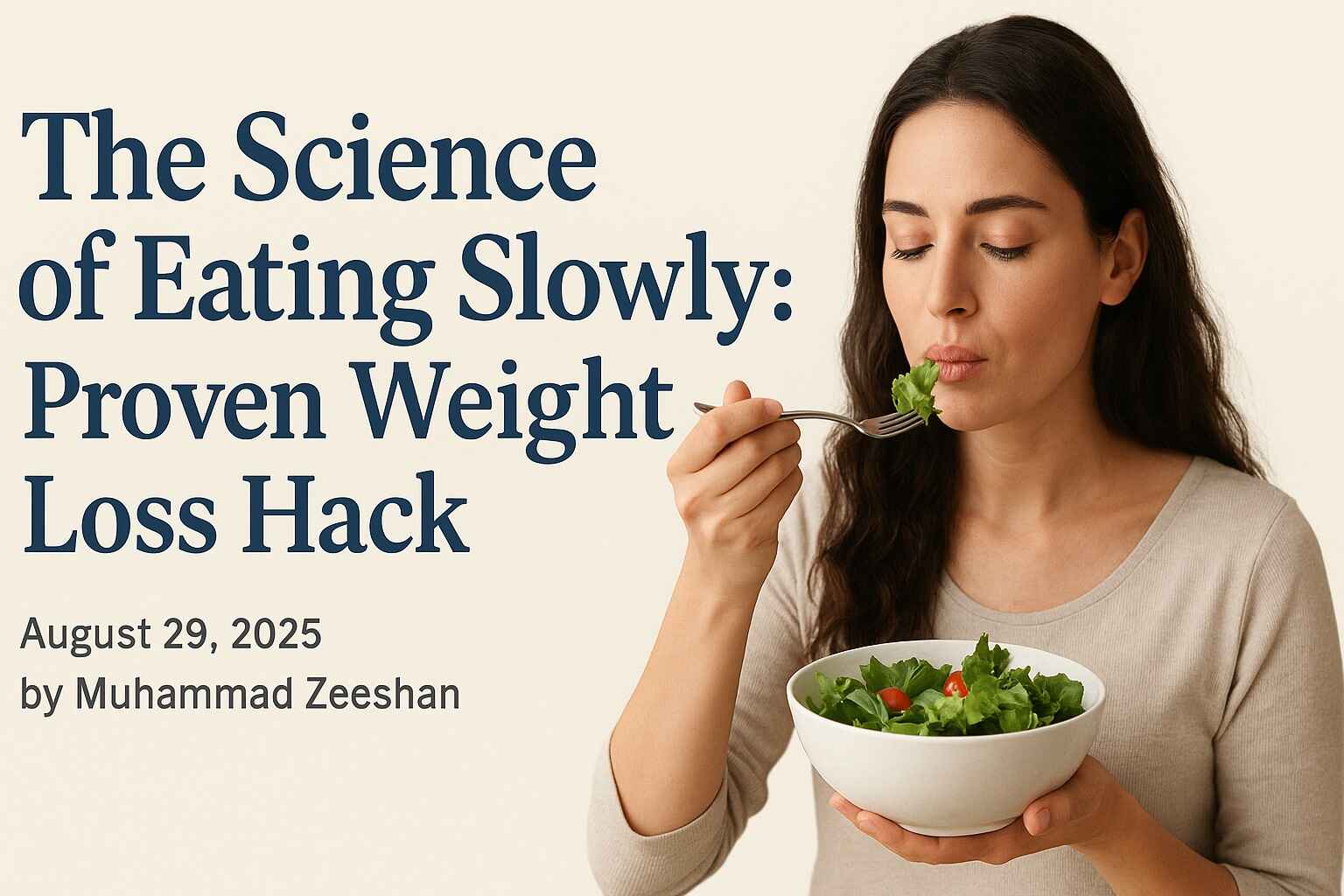
The Science of Eating Slowly: Proven Weight Loss Hack
Most people think weight loss is about what you eat. They obsess over calories, carbs, and the latest superfood trends. But here’s something they miss completely. The speed at which you eat might matter more than the food itself. Your fork could be sabotaging your efforts without you realizing it. Fast eating triggers a cascade of hormonal responses that work against weight loss. This isn’t just theory anymore.
The research is overwhelming on this topic. Studies show slow eaters consume significantly fewer calories per meal. They feel more satisfied with less food. Their bodies process hunger signals more effectively. Yet most diet advice ignores eating speed entirely. This fundamental oversight explains why so many weight loss attempts fail. The solution isn’t another restrictive diet. It’s simply learning to eat like your grandmother did before fast food existed.
The Neuroscience Behind Satiety Signals
Your brain doesn’t instantly know when your stomach is full. There’s a communication delay that trips up millions of dieters daily. When you eat, your stomach releases hormones like CCK and GLP-1. These chemical messengers travel through your bloodstream to reach your brain. The journey takes roughly twenty minutes to complete. During this delay, you can easily overeat without feeling satisfied. Your brain is still waiting for the “stop eating” signal.
CCK acts as your body’s most established satiety controller. It triggers feelings of fullness when it reaches your hypothalamus. Ghrelin works in reverse, signaling hunger when your stomach empties. Leptin regulates your long-term energy balance. When you eat too quickly, this entire
system gets overwhelmed. The hormones can’t keep pace with your fork. Fast eaters bypass their natural appetite controls completely. Slow eaters give these signals time to work properly.
Research Evidence: What the Studies Show
The data on slow eating is remarkably consistent across multiple studies. University of Chicago research found slow eaters were 42% less likely to be obese. That’s not a small difference. Controlled studies show people consume significantly fewer calories when eating slowly. The effect happens automatically without conscious effort. Participants didn’t try to eat less food. They simply felt satisfied sooner when they slowed down their pace.
An eight-year study of adult men revealed consistent weight gain among fast eaters. The slow eating group maintained stable weights over the same period. Clinical trials with healthy women showed measurable differences in meal energy intake. Even simple techniques like chewing for 30 seconds reduced snacking behavior. These aren’t cherry-picked results from biased researchers. The pattern repeats across different populations and study designs. The evidence is bulletproof at this point.
Physiological Benefits Beyond Weight Loss
Your digestive system works better when you eat slowly. Food gets broken down more thoroughly in your mouth through proper chewing. This reduces the workload on your stomach and intestines. Better digestion means improved nutrient absorption from every meal. Your body actually gets more value from the same amount of food. Bloating decreases when your digestive organs aren’t overwhelmed. Gas production drops significantly with slower eating patterns.
Blood sugar spikes become less dramatic when you eat at a measured pace. Your pancreas has time to release insulin gradually instead of in sudden bursts. This prevents the energy crashes that trigger cravings later. Your taste buds also function better with slower eating. You notice flavors and textures that fast eating completely masks. Meals become more satisfying on a sensory level. You need less food to feel psychologically fulfilled. The physical act of eating becomes enjoyable again instead of rushed fuel consumption.
Practical Implementation Strategies
Start with the 20-chew rule for every bite you take. This forces you to slow down without thinking about timing. Put your fork down between bites and let your hands rest. This simple action interrupts the automatic shoveling motion most people develop. Set a timer for 20 minutes and try to stretch your meal across that timeframe. Your brain needs this duration to register fullness signals properly.
Change your eating environment to support slower consumption naturally. Use smaller plates and utensils to make portions feel more substantial. Sit at a proper table instead of eating standing up. Turn off screens and focus entirely on your food. Research shows pace instruction works effectively for people with overweight. Practice mindful eating exercises that emphasize texture and flavor awareness. Start conversations during family meals to create natural pauses. These environmental changes make slow eating feel automatic rather than forced.
Common Obstacles and Solutions
Social dining creates pressure to match everyone else’s eating speed. You feel awkward being the last person with food remaining. Solution: arrive slightly hungry but not starving to maintain control. Start conversations to naturally slow the table’s pace down. Order appetizers or salads first to buy yourself extra time. Most people won’t even notice your slower eating once you make it consistent.
Time constraints represent the biggest challenge for busy professionals. You grab lunch between meetings or eat breakfast while commuting. Block 20 minutes minimum for meals in your calendar like any important appointment. Meal prep foods that require chewing rather than gulping down. Pack nuts, apple slices, or cut vegetables instead of smoothies. Set phone reminders to slow down when you catch yourself rushing. Breaking lifelong fast-eating habits takes deliberate practice. Your muscle memory will fight the change initially.
Measuring Your Progress
Track your meal duration instead of just calories or weight. Use your phone’s stopwatch to time breakfast, lunch, and dinner. Aim for 20 minutes minimum per main meal. Note how satisfied you feel on a scale of one to ten after eating. This helps you recognize proper satiety signals over time. Take photos of your plate before and after meals. Visual evidence shows portion control improvements you might miss otherwise.
Monitor your hunger patterns between meals more carefully than before. Fast eaters experience dramatic hunger swings throughout the day. Slow eaters maintain steadier energy levels with less snacking urges. Count how many times you reach for snacks daily. This number should decrease as your meal satisfaction improves. Weight changes happen slowly with this approach compared to restrictive diets. Focus on consistency metrics rather than rapid scale movements. Your body needs time to adjust its natural appetite regulation systems.
Most people think weight loss is all about what you eat. They obsess over calories, carbs, and the latest superfood trends. But here’s something they miss completely: slow eating for weight loss can have a bigger impact than the food itself. Eating too quickly can sabotage results without you realizing it. For tips on healthy eating habits, see Mayo Clinic – Nutrition and Harvard Health – Mindful Eating.
Integration with Other Weight Loss Methods
Slow eating amplifies every other diet strategy you might be using. Calorie counting becomes more accurate when you actually taste your food. You naturally choose more nutritious options when eating mindfully. Portion control happens automatically without measuring cups or food
scales. Your existing diet plan works better without changing a single food choice. The slow eating habit enhances whatever approach you’re already following.
Intermittent fasting pairs perfectly with deliberate eating pace during feeding windows. You feel more satisfied with smaller meals when eating slowly. This prevents overeating during your designated eating periods. Exercise timing also benefits from slower consumption patterns. Your digestion works better when meals aren’t rushed before workouts. Post-workout meals provide better recovery when eaten at proper speeds. The combination creates a synergistic effect that compounds your results. Each healthy habit reinforces the others naturally.
Conclusion
Most people see initial changes within two to three weeks of consistent slow eating. Your hunger signals become more reliable during this adjustment period. Full weight loss benefits typically emerge after six to eight weeks. This timeline requires patience compared to crash diet promises. But the results last because you’re changing fundamental eating behaviors rather than restricting foods.
Long-term sustainability depends on making slow eating feel natural rather than forced. The habit becomes automatic once your brain rewires its meal patterns. You stop thinking about eating speed and simply eat normally. This approach works for life because it doesn’t require willpower forever. Your body’s natural appetite regulation takes over the process. Unlike restrictive diets that eventually fail, slow eating becomes your new normal. The science supports what our ancestors knew instinctively about proper meal consumption.