
The gym debate never ends: bodyweight vs weight training for muscle building. You walk in and see people doing push-ups next to others benching twice their weight. Both groups swear their method builds muscle faster, and both have impressive physiques to back up their claims. But when it comes to bodyweight vs weight training for muscle building, the truth is more complex than gym talk suggests. Understanding how your body responds to tension, progression, and recovery is the real key in the bodyweight vs weight training for muscle building debate.
Here’s what matters: muscle growth follows specific rules regardless of your training method. Your muscles don’t care if resistance comes from barbells or your own body. They respond to tension, volume, and progressive challenges. The real question isn’t which method works. It’s which one helps you build muscle more efficiently for your specific situation and goals.
The Science of Muscle Growth
Your muscles grow through three key mechanisms that work together like a perfectly tuned engine. Mechanical tension happens when you challenge your muscles with resistance. Metabolic stress occurs when you push muscles to fatigue and feel that burning sensation. Muscle damage creates tiny tears that repair stronger than before.
Progressive overload drives everything forward and determines your success rate. This means gradually increasing difficulty over time through more weight, reps, or intensity. Without progression, your muscles adapt and stop growing within weeks. Both bodyweight and weight training can trigger these mechanisms. The difference lies in how easily you can control and advance each factor consistently.
Bodyweight Training for Muscle Building
Bodyweight exercises offer unique advantages that many gym enthusiasts overlook completely. You can train anywhere without equipment or membership fees. Your body moves as one integrated unit, building functional strength patterns. Most people experience fewer injuries because movements feel more natural and controlled.
However, progression becomes increasingly difficult as you advance in your fitness journey. Adding resistance requires creative variations like single-arm push-ups or pistol squats. These advanced moves demand exceptional balance and coordination that takes months to develop. You also can’t easily isolate specific muscles like biceps or rear delts. This limitation slows growth for certain muscle groups compared to targeted weight training.
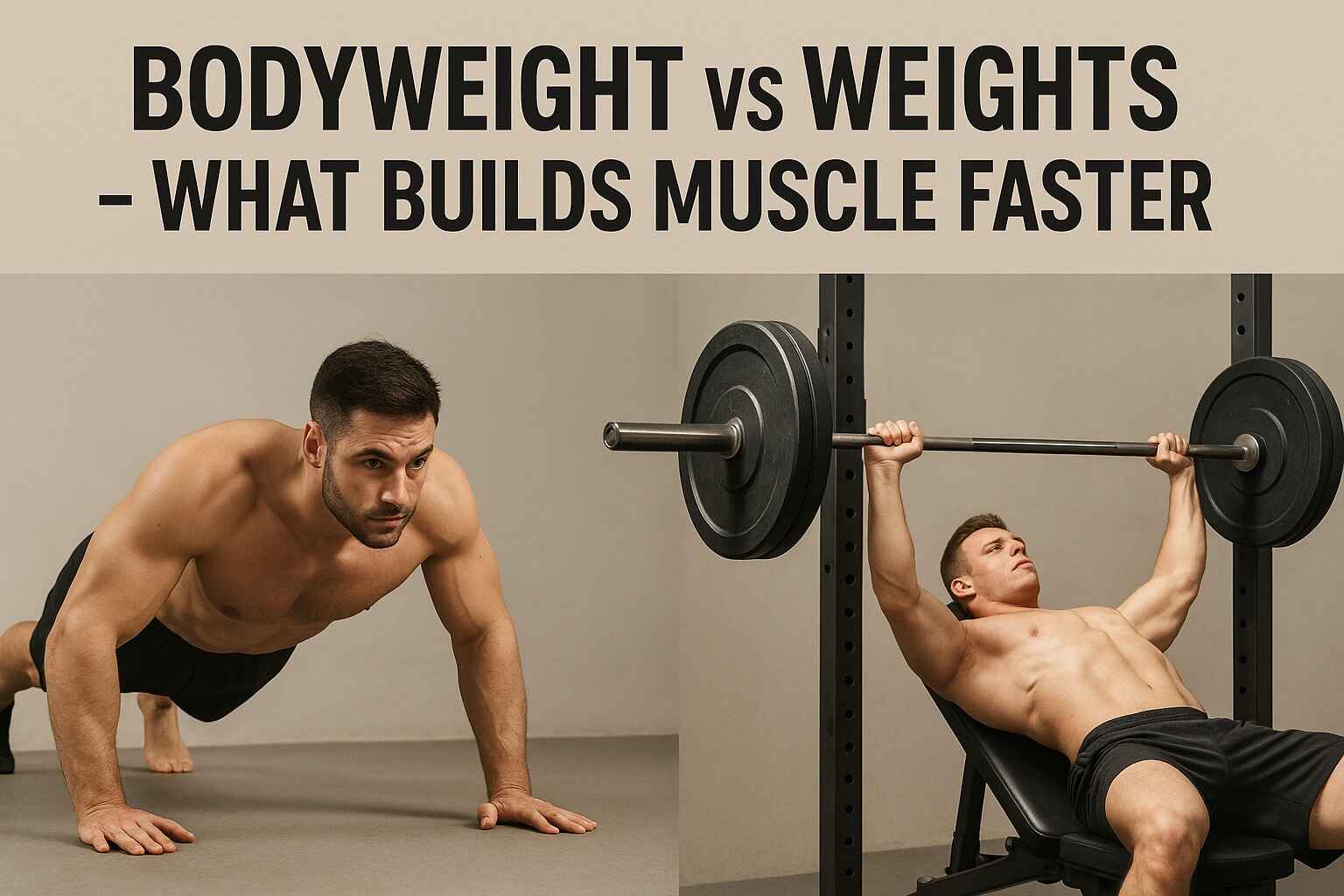
Weight Training for Muscle Building
Weight training gives you precise control over every aspect of muscle development. You can add five pounds to your bench press this week. You can isolate your triceps with overhead extensions next session. This specificity allows targeted growth exactly where you want it most.
The progression path stays crystal clear from beginner to advanced levels continuously. Beginners see rapid strength gains within their first month of consistent training. Advanced lifters can still add weight or reps systematically for years. You can also train muscles through their full range of motion easily. However, you need gym access, proper equipment, and time to learn technique. Poor form with heavy weights increases injury risk significantly compared to bodyweight alternatives.
Research-Based Comparison
Recent studies reveal surprising findings about muscle building speed between both methods. Harvard research shows bodyweight exercises build muscle independent of external loads when performed correctly. One eight-week study found calisthenics increased push-up strength by 16.4% and pull-up strength by 39.2%.
However, weight training typically produces faster initial results for most people consistently. Studies comparing both methods show similar muscle size gains over time periods. The key difference lies in progression speed rather than final outcomes ultimately. Weight training allows smaller, more frequent increases in difficulty than bodyweight variations. This means you can challenge your muscles more systematically week after week.
Practical Recommendations
Beginners should start with bodyweight training to master movement patterns and build foundational strength. Your body teaches you proper form naturally without external weight complications. Most people can progress steadily for three to six months before hitting plateaus.
Intermediate trainees benefit from combining both methods for optimal muscle building results. Use weights for targeted muscle isolation and heavy compound movements like squats. Add bodyweight exercises for functional strength and movement quality improvements. Advanced athletes often cycle between phases of each method strategically. This approach prevents plateaus while maximizing the unique benefits of both training styles.
Research on muscle growth mechanisms
👉 National Library of Medicine – Muscle Hypertrophy Research
Conclusion
The evidence shows both methods build muscle effectively when applied with proper progression. Weight training typically delivers faster initial results due to easier load increases. Bodyweight training matches these results over longer timeframes with consistent creative
progression. Your choice depends on access, preferences, and specific goals rather than effectiveness.
Start where you are with what you have available right now. Beginners should master bodyweight basics before adding external weights to their routine. Experienced trainees can use hybrid approaches for maximum muscle building potential. Focus on progressive overload regardless of your chosen method. Track your workouts, challenge yourself weekly, and stay consistent for months rather than weeks.