
You think you’re eating healthy, but your scale keeps climbing. Sound familiar? The truth is, many American foods sabotaging your diet are disguised as “healthy” options. Some of the country’s most popular meals pack more calories than a Big Mac—like salads with 1,200 calories or smoothies loaded with 80 grams of sugar. These sneaky American foods sabotaging your diet create hidden weight gain while pretending to be wholesome.
The average American underestimates their daily calorie intake by 500 calories. That’s enough to gain a pound every week without realizing it. Restaurant portions have doubled since the 1980s, but we still see them as normal. Meanwhile, food companies spend billions convincing us their processed products are wholesome choices. The result? Over 40% of adults struggle with obesity, often wondering why their diets keep failing. Today we’re exposing the top 10 American foods sabotaging your diet and giving you simple swaps to stay on track without sacrificing taste.
The Science Behind Food Sabotage
Food companies hire psychologists to make you crave their products. They use terms like “natural” and “wholesome” even when products contain 40 ingredients. This marketing trick is one of the biggest reasons behind many American foods sabotaging your diet. Your brain sees these health buzzwords and switches off critical thinking. Meanwhile, portion sizes keep growing while our plates stay the same size. What used to be a large coffee is now considered small.
Your body doesn’t recognize liquid calories the same way it does solid food. That’s why drinks are one of the most common American foods sabotaging your diet—you can sip a 400-calorie smoothie and still feel hungry an hour later. Added sugars hide under 61 different names on ingredient labels. High fructose corn syrup, rice syrup, and fruit juice concentrate all spike your blood sugar. The food industry knows you won’t calculate total sugars across multiple sources. They also exploit the “health halo effect” where one good ingredient masks several bad ones. A muffin with blueberries, for example, is one of those tricky American foods sabotaging your diet because it still contains three tablespoons of sugar and refined flour.
The Top 10 Diet-Sabotaging American Foods
1. Restaurant Salads
That Caesar salad you ordered for lunch? It probably has more calories than a cheeseburger. Restaurant salads average 730 calories before you add protein or extra dressing. The culprits are creamy dressings, cheese, croutons, and candied nuts. A single ladle of ranch dressing adds 300 calories to your bowl. Many chain restaurants serve salads with over 1,200 calories and 75 grams of fat.
The problem isn’t the lettuce or vegetables. It’s everything else piled on top that turns healthy greens into calorie bombs. Fried chicken strips, bacon bits, and dried fruit push numbers even higher. Restaurant kitchens use heavy cream in dressings and coat nuts in sugar. They also serve portions three times larger than what nutritionists recommend. Your “light” lunch becomes heavier than most dinners. Ask for dressing on the side and use half the amount they provide. Choose grilled protein over fried options. Skip the candied nuts and ask for plain ones instead. Load up on actual vegetables like tomatoes, cucumbers, and peppers.
2. Smoothies and Juice Bars
Your daily green smoothie contains more sugar than two cans of Coke. Most juice bar smoothies pack 60-80 grams of sugar from fruit juices and added sweeteners. That’s double your recommended daily sugar intake in one drink. The fiber gets destroyed during blending, leaving you with liquid sugar that spikes your blood glucose. Your body processes this the same way it handles candy.
Large smoothies can hit 800 calories without making you feel full for long. The problem is fruit juice bases instead of whole fruits with water. Juice bars add honey, agave, and frozen yogurt to mask bitter greens. They use three bananas where you’d eat one whole banana at home. The “detox” and “cleanse” marketing makes you think you’re being healthy while consuming dessert-level sugar. Stick to smoothies made with whole fruits, vegetables, and unsweetened almond milk. Limit fruit to one cup per smoothie and add protein powder for satiety. Skip juice bases entirely and use water or plain Greek yogurt instead.
3. Granola and “Health” Cereals
That bowl of granola contains more sugar than a frosted donut. Most commercial granolas pack 12-16 grams of sugar per serving before you add milk. The serving size is usually one-third cup, but most people pour twice that amount. Your “healthy” breakfast just became a 400-calorie sugar bomb. Even cereals marketed as whole grain often contain more sugar than fiber.
The problem is honey, maple syrup, and brown sugar coating every oat cluster. Companies use health buzzwords like “ancient grains” and “natural” to distract from sugar content. They shrink serving sizes on labels to make nutrition facts look better. A realistic portion of granola delivers 600 calories and 30 grams of sugar. That’s more than most candy bars provide in terms of empty calories. Choose plain oatmeal and add your own fresh fruit and nuts. Look for cereals with less than 6 grams of sugar per serving. Read ingredient lists and avoid anything with sugar in the first three ingredients. Measure portions using a measuring cup until you learn proper serving sizes.
4. Coffee Shop Drinks
Your morning latte has turned into liquid dessert without you noticing. A large flavored coffee drink can pack 500-700 calories and 70 grams of sugar. That’s equivalent to eating three chocolate chip cookies for breakfast. Seasonal drinks like pumpkin spice lattes contain more calories than most meals. The whipped cream alone adds 100 calories and 11 grams of fat to your cup.
Coffee shops use full-fat milk, flavored syrups, and sugar-loaded toppings as standard ingredients. They’ve trained us to see 20-ounce drinks as normal when that’s actually two servings. The caffeine masks how much sugar you’re consuming until the crash hits later. Even “skinny” versions often contain artificial sweeteners that trigger more cravings throughout the day. Your daily coffee habit could be adding 2,000 calories per week to your diet. Order smaller sizes and ask for half the syrup pumps they normally use. Switch to almond or oat milk to cut 50 calories per drink. Skip whipped cream and flavored additions that don’t actually improve the coffee taste.
Related blog (internal link)
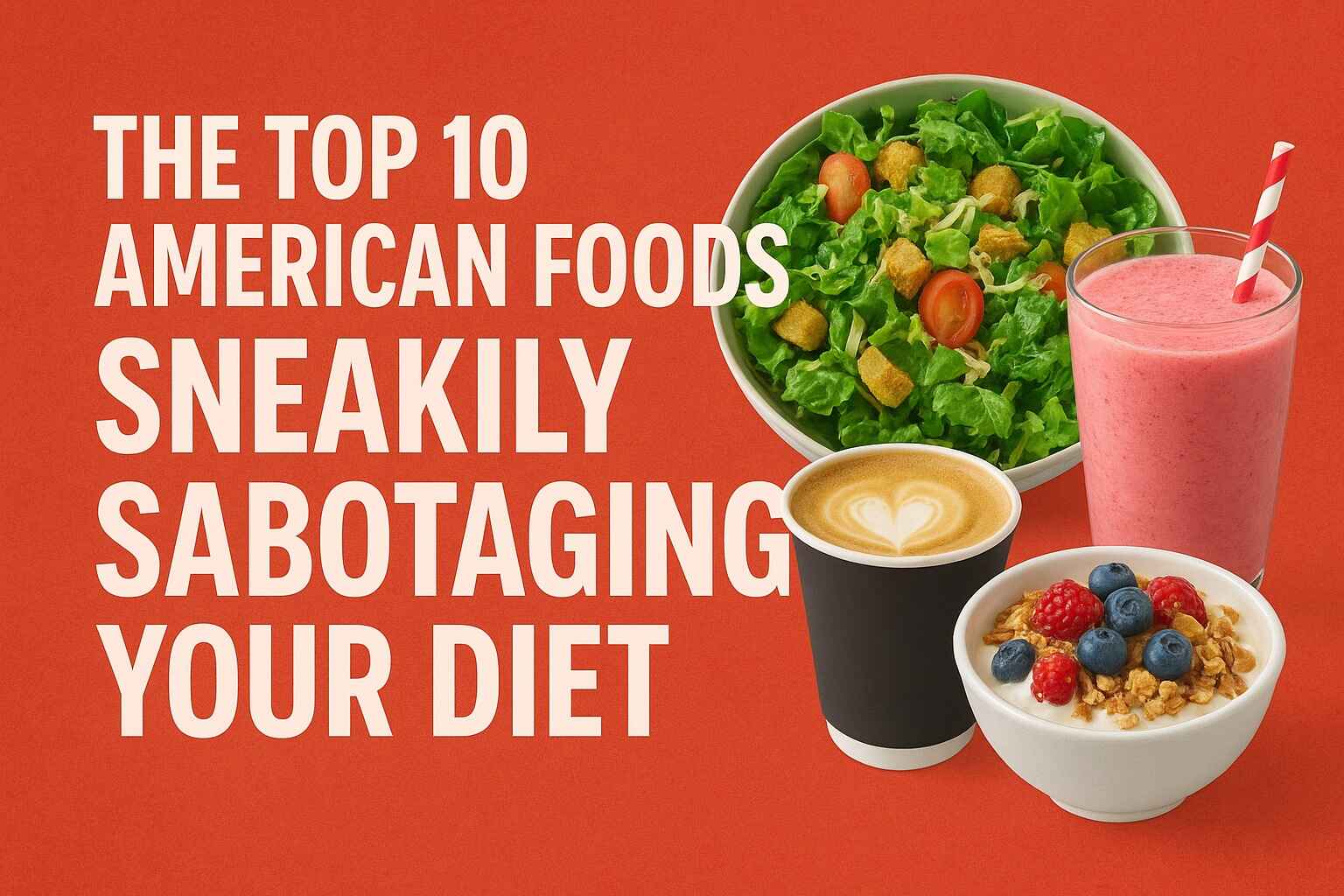
The Top 10 American Foods Sneakily Sabotaging Your Diet
5. Trail Mix and Nuts
That handful of trail mix you’re snacking on contains 300 calories in just two ounces. Most people eat straight from the bag and consume 4-6 ounces without thinking. Your healthy snack just became a 900-calorie meal replacement. Commercial trail mixes load up on chocolate chips, yogurt-covered raisins, and sugar-coated nuts. The dried fruit is often sweetened with extra sugar beyond what nature provided.
Nuts are incredibly calorie-dense at 160-180 calories per ounce even without added oils. Food companies coat them in honey, salt, and vegetable oils for better taste. They market trail mix as hiking food but sell it to desk workers. Your body needs those calories for actual hiking, not sitting at a computer. A single cup of mixed nuts contains over 800 calories and 70 grams of fat. Make your own mix using raw almonds, walnuts, and unsweetened dried fruit. Portion out single servings in small containers to avoid mindless eating. Limit nuts to one ounce per day and choose varieties without added oils or sugar.
6. Yogurt Parfaits and Flavored Yogurts
Your strawberry yogurt contains more sugar than a candy bar and less protein than advertised. Flavored yogurts pack 20-30 grams of added sugar to mask the natural tartness. That parfait from the coffee shop hits 450 calories with granola and fruit syrup. The “fruit” is often just high fructose corn syrup with artificial flavoring and coloring. Even Greek yogurt loses its health benefits when loaded with sugar and mix-ins.
Restaurant parfaits layer sugar between every component to keep you coming back for more. The granola adds 200 calories, the flavored yogurt contributes 150, and fruit syrup brings another 100. You’re eating dessert disguised as breakfast while thinking you made a healthy choice. Many yogurt cups contain more sugar per ounce than ice cream does. The probiotic benefits get overshadowed by blood sugar spikes from excessive sweeteners. Buy plain Greek yogurt and add your own fresh berries and a drizzle of honey. Make parfaits at home using unsweetened yogurt, raw nuts, and actual fruit pieces. Check labels and avoid anything with more than 10 grams of sugar per serving.
7. Protein Bars
Most protein bars are candy bars wearing workout clothes and charging triple the price. They contain 15-25 grams of sugar, artificial flavors, and cheap protein fillers. Your post-workout “fuel” has the same sugar content as a Snickers bar. Many use soy protein isolate, which your body doesn’t absorb as well as whole food proteins. The fiber they add often causes digestive issues and bloating.
These bars cost $3-5 each but provide nutrition you can get from $0.50 worth of real food. Companies add vitamins to justify calling them health products instead of candy. The protein content rarely matches what your muscles actually need after exercise. Most people eat them as snacks, not post-workout recovery, adding 250 unnecessary calories to their day. Your body processes the sugar rush the same whether it comes from protein bars or candy. Choose Greek yogurt with berries for natural protein and probiotics instead. Hard-boiled eggs provide complete protein without added sugars or artificial ingredients. If you need portable protein, try nuts or string cheese over processed bars.
8. Muffins and Bakery Items
That blueberry muffin from your coffee shop is actually cake pretending to be breakfast. Most bakery muffins contain 400-600 calories and 30-40 grams of sugar per piece. They’re made with refined flour, vegetable oil, and enough sugar to satisfy dessert cravings. The “fruit” pieces are often dried and sweetened, adding more sugar to an already sweet base. A single muffin provides more calories than two slices of pizza.
Bakeries make muffins using cake recipes with minimal nutritional modifications to justify morning consumption. They’ve doubled in size since the 1980s but we still see them as single servings. The bran and whole wheat versions still contain massive amounts of sugar and oil. Even homemade muffins from “healthy” recipes pack 250-300 calories each due to portion sizes. Your brain doesn’t register liquid oil calories the same way it notices butter. Choose whole grain toast with natural peanut butter for sustained energy instead. If you want baked goods, split a muffin in half and save the rest. Look for mini muffins that provide portion control without willpower struggles.
9. Condiments and Sauces
Those innocent squirts of ketchup and ranch are adding 200-300 hidden calories to every meal. Two tablespoons of ranch dressing pack 140 calories and 14 grams of fat. Barbecue sauce contains 6 grams of sugar per tablespoon, which most people triple without measuring. Your healthy grilled chicken becomes a calorie bomb when drowning in sweet and sour sauce. Even “light” versions replace fat with extra sugar to maintain taste.
Restaurant portions of condiments are massive compared to what nutritionists recommend for daily intake. They bring you ramekins holding 4-6 tablespoons when one tablespoon should be plenty. Honey mustard, teriyaki glaze, and creamy dressings can double your meal’s calorie count. Many condiments contain high fructose corn syrup as their second or third ingredient. The sodium content often exceeds 300mg per serving, making you retain water weight. Make your own dressings using olive oil, vinegar, and fresh herbs for flavor. Use mustard instead of mayo to save 90 calories per sandwich. Measure condiments with actual spoons instead of eyeballing portions that keep growing larger.
10. Diet and “Light” Foods
Diet foods often make you gain more weight than their regular counterparts do. They replace natural fats and sugars with artificial chemicals that confuse your hunger signals. Your brain doesn’t recognize these fake ingredients as satisfying, triggering cravings for more food. Light salad dressings add extra sugar to compensate for removed fat, sometimes containing more calories. The “sugar-free” label hides artificial sweeteners that can spike insulin and increase appetite.
These products train your taste buds to expect intense artificial flavors over natural food tastes. Companies use marketing loopholes to call foods “light” by reducing one ingredient while increasing others. Fat-free cookies replace butter with refined flour and extra sugar, creating the same calorie count. Your body processes artificial sweeteners differently, often storing more of what you eat as fat. Many people eat larger portions of diet foods thinking they’re automatically healthier choices. Choose whole foods that don’t need marketing labels to prove their nutritional value. Read ingredient lists and avoid products with more than five unpronounceable chemicals. Trust foods that have existed for centuries over laboratory-created diet products.
Action Plan: Making Smarter Choices
Reading nutrition labels becomes simple once you know the industry tricks and loopholes. Ignore the front-of-package marketing claims and flip to the black-and-white nutrition facts panel. Look at serving sizes first because companies shrink them to make calories appear lower. A bag of chips might list 150 calories but contain 2.5 servings nobody actually measures. Check the ingredient list for added sugars hiding under different names like evaporated cane juice. Anything ending in “ose” or “syrup” counts as sugar your body will process identically.
Your hand provides the best portion control tool without carrying measuring cups everywhere you eat. A palm-sized portion of protein, a fist of vegetables, a cupped handful of carbs, and a thumb of fats. This works regardless of your body size since your hands scale proportionally. Restaurants serve portions 2-3 times larger than your body actually needs for fuel. Ask for a to-go box immediately and pack half your meal before taking the first bite.
Meal prep prevents desperate food decisions when hunger strikes and willpower disappears completely. Spend two hours on Sunday preparing proteins, chopping vegetables, and portioning snacks for the week. Cook large batches of quinoa, roast sheet pans of vegetables, and pre-make salad components. Store everything in clear containers so healthy options stay visible and convenient to grab.
When eating out, become the person who asks questions about preparation methods and ingredient substitutions. Request grilled instead of fried proteins, dressing on the side, and extra vegetables instead of starchy sides. Most restaurants accommodate reasonable modifications without charging extra fees. Skip the bread basket entirely rather than testing your willpower against warm, buttery temptation. Order first to avoid being influenced by other people’s less healthy choices at your table.
Conclusion
The foods sabotaging your diet hide behind health halos and clever marketing designed to confuse you. Restaurant salads pack more calories than burgers while smoothies deliver more sugar than sodas. Even protein bars and granola masquerade as healthy choices while containing candy-level sugar content. Your daily coffee drink and innocent condiments add hundreds of unnoticed calories to every meal. The solution isn’t perfection but awareness of where hidden calories actually lurk in your routine.
Small changes create massive results when you make them consistently over months instead of days. Choose whole foods that don’t need ingredient lists to prove their nutritional value. Measure portions until you retrain your eyes to recognize appropriate serving sizes for sustainable weight management. Ask questions at restaurants and pack half your meal immediately upon arrival at your table. Most importantly, stop trusting food marketing and start reading actual nutrition labels before making purchasing decisions. Your scale will thank you for paying attention to these sneaky diet destroyers. Start with one food swap this week and add another next week for lasting success.