
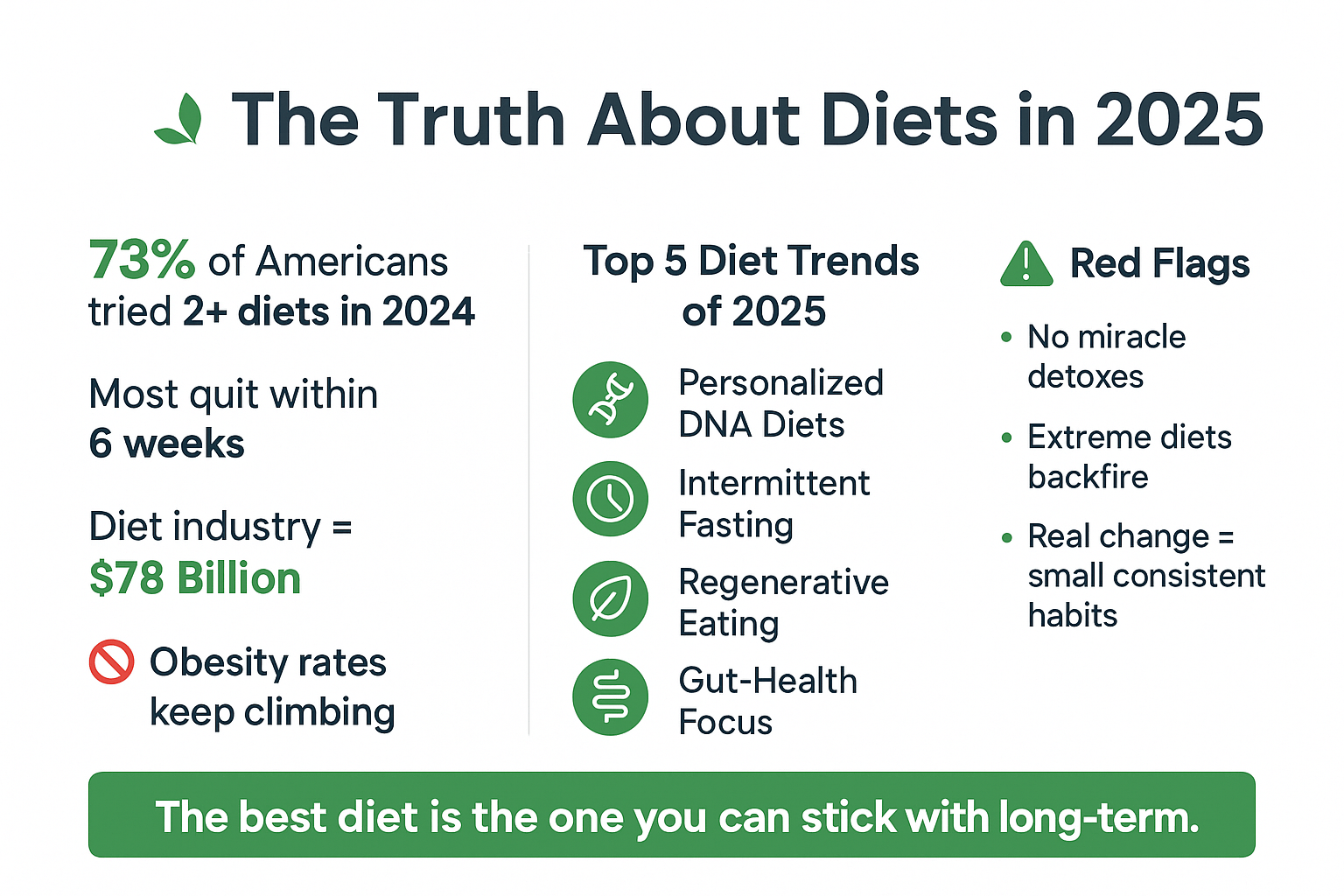
You’ve probably seen it too. Your social media feed is flooded with before-and-after photos, and everyone’s debating the latest diet trends 2025. From crash cleanses to celebrity-endorsed plans, Americans are trying everything. In fact, 73% tried at least two different diets in 2024—but most abandoned them within six weeks. The diet industry is worth $78 billion, yet obesity rates keep climbing.
Let me be honest with you about what’s really happening. We’re living in the golden age of nutrition confusion. Every week brings a new “revolutionary” eating plan. Some promise to reset your metabolism overnight. Others claim to unlock your genetic potential through food. The truth is far more complex and interesting than these flashy headlines suggest.
The Rise of Personalized Nutrition
Remember when one-size-fits-all diets were the norm? Those days are fading fast. Now companies are analyzing your DNA to create custom meal plans. They’re promising to crack your personal code for weight loss. Apps use artificial intelligence to track your responses to different foods. Some even monitor your blood sugar in real-time. It sounds like science fiction, but millions of Americans are already doing this.
But here’s what the companies won’t tell you upfront. Most genetic markers only explain about 5% of weight variation between people. Your environment and habits matter way more than your genes. That expensive DNA test might not be worth the money. However, the personalized tracking approach does have real benefits. It makes you more aware of how different foods actually affect your body.
Top 5 Diet Trends Dominating 2025
Let’s talk about what everyone’s actually trying right now. These aren’t the fad diets from last year. They’re the ones your coworkers are discussing at lunch. Your neighbor probably mentioned at least one of them recently. Some have solid science behind them. Others are mostly clever marketing with a grain of truth. I’ll walk you through each one honestly.
The interesting thing is how these trends reflect our current anxieties. We’re worried about the environment, so regenerative eating is trending. We’re stressed about time, so intermittent fasting appeals to busy people. We’re concerned about gut health after years of processed foods. Each trend promises to solve multiple problems at once. But reality is usually more nuanced than the promises suggest.
Red Flags: What the Science Actually Says
Here’s where I need to be your reality check friend. You know those dramatic transformation posts flooding Instagram? Most of them are misleading or completely fake. The before photos often use bad lighting and unflattering poses. The after shots are professionally lit and edited. Real sustainable weight loss happens slowly and isn’t always photogenic. Those six-week transformations rarely last six months.
Scientists have debunked many popular diet claims this year. Your body doesn’t actually need to “detox” through special cleanses. You can’t boost your metabolism by 40% with any single food. Cutting entire food groups isn’t necessary for most people. The research shows that extreme restrictions often backfire long-term. Moderate, consistent changes work better than dramatic overhauls for lasting results.
Making Informed Choices
Look, I get it. You want something that actually works this time. You’re tired of starting over every few months. The good news is that you can make smarter choices. Start by asking yourself why you want to try this particular diet. Is it because a celebrity endorsed it? Or because science genuinely makes sense to you?
Before jumping into anything new, consider your actual lifestyle honestly. Can you realistically prepare meals for three hours every Sunday? Will you remember to take supplements twice daily? Do you have time for complicated tracking apps? The best diet is one you can actually stick with long-term. Your past self probably knew this, but it’s worth remembering again.
“Everyone’s debating the latest diet trends 2025.”
🔗 Link “diet trends 2025” → The Top 10 American Foods Sneakily Sabotaging Your Diet
Conclusion
So here’s what I want you to take away from our conversation. The diet industry will keep creating new trends every year. Most will promise quick fixes that sound too good to be true. Some will have pieces of solid science mixed with marketing hype. Your job isn’t to find the perfect diet. It’s to find an approach that fits your real life.
Stop chasing the next big thing and start paying attention to patterns. What eating habits make you feel energetic and satisfied? Which ones leave you cranky and obsessing over food? The answer isn’t in some influencer’s morning routine. It’s in your own honest observations about what actually works for your body. Trust yourself more than the trends.
Will personalized diets based on DNA be affordable for most people by 2025?
DNA-based diets still carry high costs. Advances and more companies offering services are driving prices down, but they remain out of reach for many.
- How will GLP-1 weight loss medications affect diet trends in 2025?
GLP-1 drugs reduce appetite but can cause muscle loss. Users will need to focus on protein intake and physical activity to stay healthy.
- Are all processed foods bad for health in 2025?
No. Many processed foods provide essential nutrients and convenience. Knowing which to choose is more important than avoiding all processed items.
- Will plant-based diets replace other diets fully in the U.S. by 2025?
Plant-based eating is growing fast but won’t fully replace other diets. Most people prefer a flexible approach with both plant and animal proteins.
- Can biohacking replace traditional dieting by 2025?
Biohacking enhances health habits but won’t replace balanced diets. It’s a tool to complement healthy eating, not a substitute.